
Quality Control and Assurance for Code-Compliant Fabrication
Quality control at Krueger Engineering covers inspection, documentation, and procedure oversight across every phase of fabrication. The department is structured to support code compliance, traceability, and dependable workmanship from start to finish.
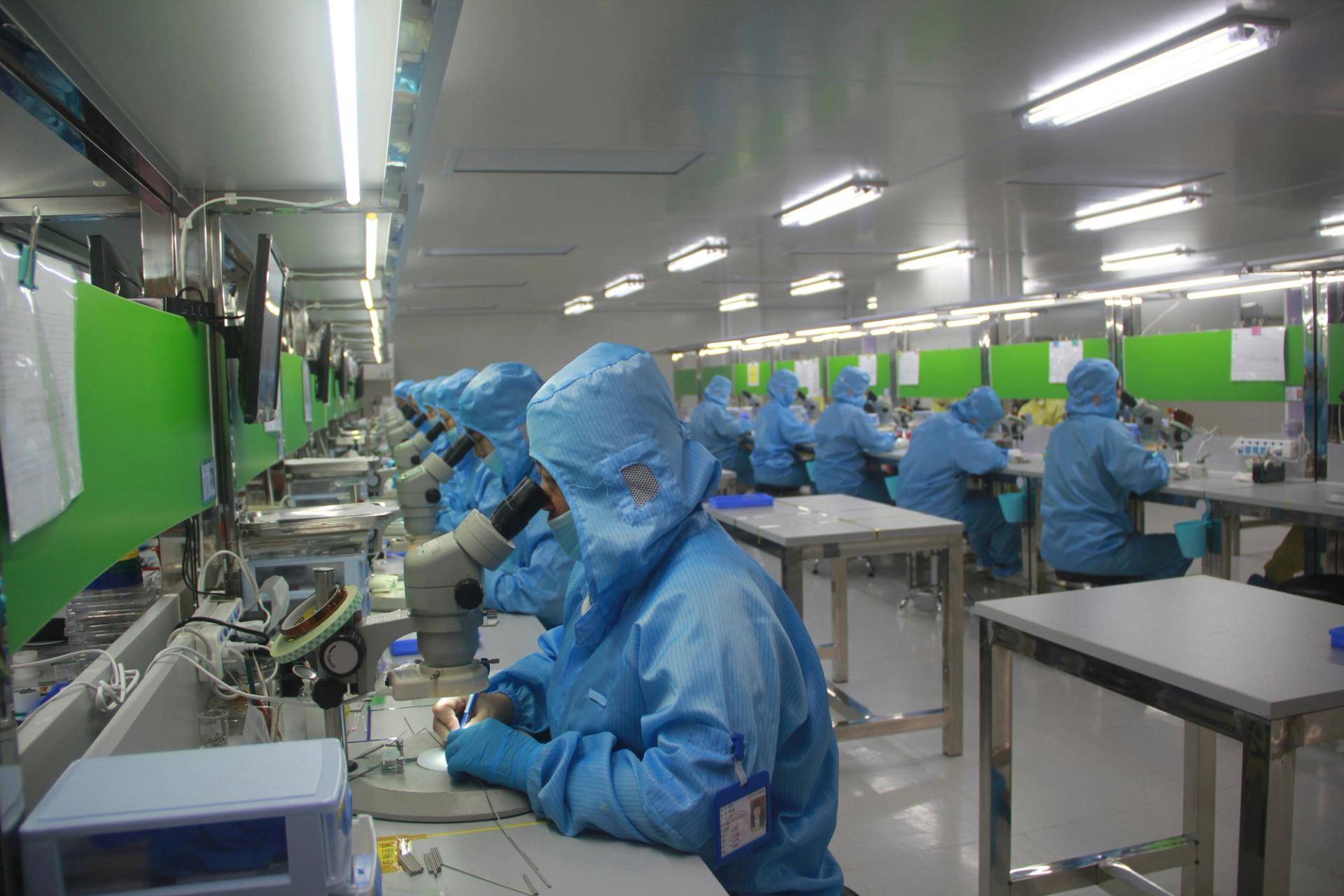
Quality Oversight Across the Full Fabrication Process
At Krueger, quality control is not treated as a final checkpoint. It runs through inspection, records management, procedure control, and customer documentation across the full manufacturing cycle. The department oversees requirements tied to customer specifications as well as applicable portions of ASME Section VIII, Division I, B31.1, and the National Board Inspection Code, helping maintain consistency from raw material verification through final documentation. That level of oversight is especially important in heat exchanger quality control, where traceability, weld qualification, and code alignment directly affect the finished equipment.
QC Capabilities and Documentation Support
Krueger’s quality program combines inspection, qualification control, NDE oversight, and documentation management to support fabrication that must stand up to customer review and code requirements.
Inspection, Documentation, and Compliance Scope
- Inspection Oversight: The Quality Control Department is responsible for all phases of inspection tied to customer specifications and applicable code requirements.
- Physical Product Examination: QC includes examination of product characteristics and the acceptable standards associated with those examinations.
- Procedure Management: The Quality Control Manager is responsible for WPS, PQR, and WPQ administration.
- Document Control: Material test records, manufacturer’s data reports, and nondestructive examination reports are compiled into customer data books.
- In-House Inspection Team: Shop inspectors handle inspection activity within the facility under departmental oversight.
- NDE Capability: The department is qualified to Level II interpretation across magnetic particle, liquid penetrant, ultrasonic, and radiographic disciplines, and we can perform all NDE except radiograph.
- Authorization Credentials: Krueger holds ASME authorization for the “U” symbol and National Board authorization for the “R” symbol for repairs and alterations of pressure vessels, heat exchangers, and power boilers.
What This Means for Customers
- Stronger Traceability: Centralized records and reporting make it easier to verify materials, inspections, and fabrication history.
- Code-Oriented Execution: QC is structured around recognized code frameworks rather than informal shop checks alone.
- Better Documentation Readiness: Organized data books support customer review, turnover, and project closeout.
- Closer Control of Weld Quality: Oversight of WPS, PQR, and WPQ helps maintain consistency in qualified welding operations.
- Broader Manufacturing Alignment: Because Krueger also engineers, fabricates, welds, heat treats, and tests equipment in-house, quality control remains closely tied to the actual production process.
- Application Value for Heat Transfer Equipment: This integrated approach is especially useful in heat exchanger QC, where documentation, inspection, and code compliance all need to stay coordinated through fabrication.
When equipment must meet customer specifications, code requirements, and documentation expectations at the same time, Krueger’s quality control department provides the structure needed to keep the project on track.
Need Quality Documentation and Inspection Support for Your Project?
Send us your specification requirements, code expectations, and documentation needs to discuss the right quality control approach for your equipment.
Industries We Serve

Petroleum
Specialty
Pharmaceutical

Petrochemical
Power Generation
Mining / Metallurgy
Explore Our Full Service Capabilities
Beveling
Krueger Engineering provides precision edge preparation for steel plates up to 2” thick, ensuring optimal weld penetration and structural integrity for your most demanding projects.
Eccentric & Concentric Cones
We manufacture eccentric and concentric cones to meet exact project requirements across demanding industrial applications.
Forming
Krueger Engineering provides precision steel forming services for heavy industrial parts and custom-fabricated components.
Pipe and Plate Forming
Krueger Engineering provides precision pipe and plate forming services for heavy-duty industrial applications. We form heavy walls and high-strength pipe with the accuracy and consistency required for demanding projects.
Plasma Cutting
Krueger Engineering delivers precision plasma cutting services for industrial plate fabrication and edge preparation. Our equipment is built to produce accurate parts, clean cuts, and dependable results for demanding applications.
Plate Bending
Krueger Engineering provides high-capacity plate bending services for industrial projects that require accuracy, repeatability, and dependable performance. Our operation is built to support heavy-duty forming for pressure, structural, and custom fabrication applications.
Plate Crimping
Krueger Engineering provides advanced crimping solutions to shape heavy-gauge steel into precise, repeatable geometries. We ensure every profile meets the rigid standards required for large-scale industrial and thermal projects.
Post Weld Heat Treat
Krueger Engineering provides post weld heat treat processing for large fabricated components and tank-related applications.
Rolled Cylinders
Krueger Engineering delivers high-precision cylinders tailored for pressure vessels, storage tanks, and heavy structural applications.
Rolling
Krueger Engineering provides high-capacity plate rolling services for industrial projects that require controlled forming, repeatable geometry, and dependable fabrication performance.
Welding and Cutting
Krueger Engineering delivers welding and cutting services for complex fabrication work that demands strength, control, and code-focused execution.
Engineering
Krueger delivers engineering support for custom heat transfer equipment and complex industrial projects. Our team combines specialized design software with experienced technical review to develop solutions that are practical to build and built to perform.
Frequently Asked Questions About Quality Control
Ready to Discuss Your Project?
Contact our engineering team for a custom quote or technical consultation